

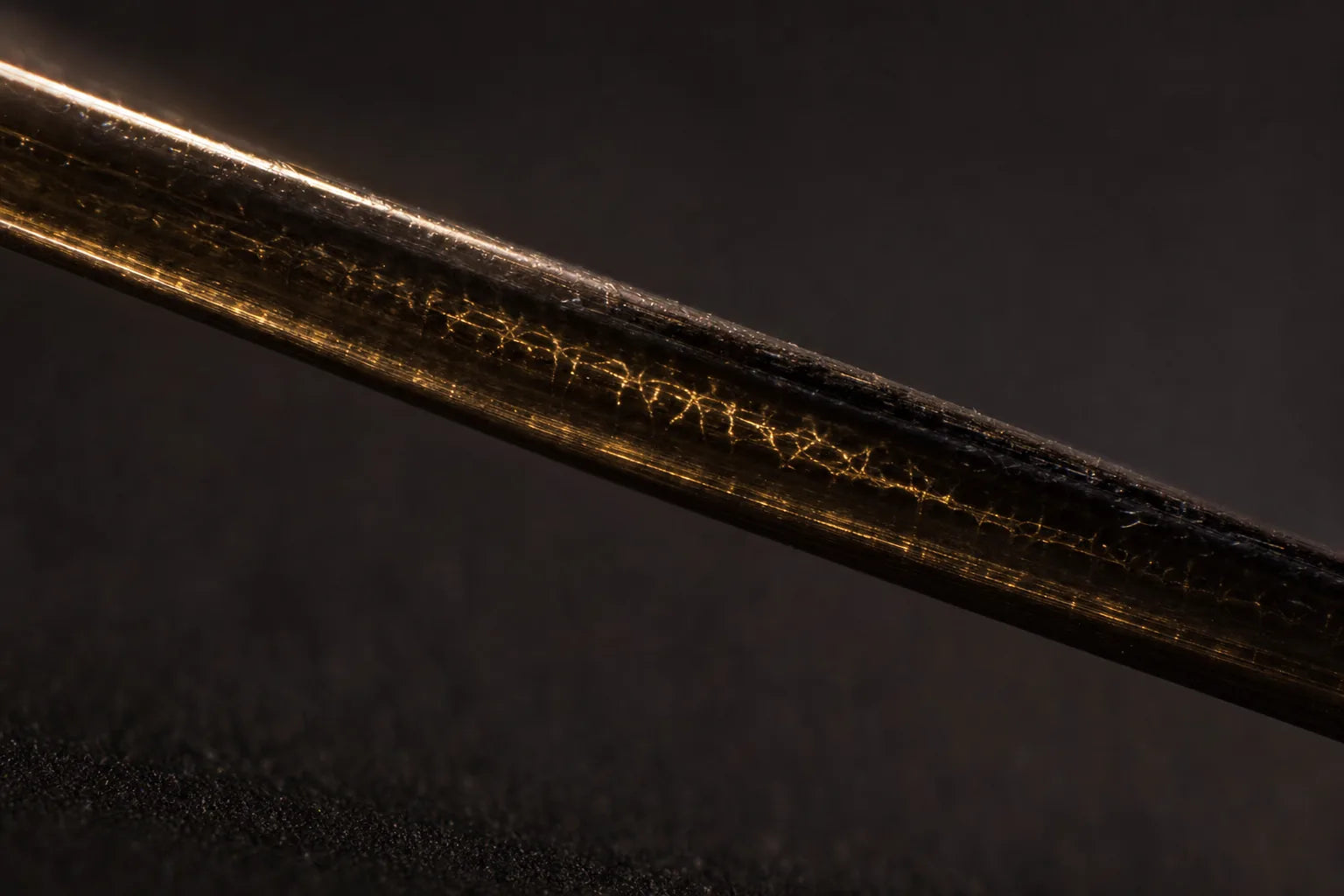
Disulfide bonds are the sulfur cross-links that hold the hair's core together, and they are what bleach destroys when it weakens your hair. Each bond is a chemical link between two sulfur-containing points on the protein chains, and together they turn loose protein fibres into a strong, springy cable.
Hair is full of weaker, temporary bonds (the ones that let you restyle it with water and heat), but the disulfide bonds are the permanent rivets. They are why a healthy wet strand can stretch and spring back instead of snapping. The more intact disulfide bonds, the stronger the hair.
Bleach's oxidizers attack the sulfur, converting the bond into a dead-end form called cysteic acid that cannot reconnect. Raman spectroscopy showed a fourth bleaching session further reducing disulfide bonds and increasing cysteic acid compared with three (Di Foggia et al. 2021); normal bleaching breaks about 15-25% of hair's disulfide bonds, and wet strength falls with them (Robbins 2012). This is the chemistry behind why bleached hair stretches, goes gummy, and snaps.
You cannot un-break a disulfide bond, but you can build new bonds in its place. Some treatments are designed to form fresh cross-links in their place; independent evidence for this in hair is still limited. ANATOMY's molecular reconstruction does this with a reaction from the click-chemistry family (2022 Nobel Prize in Chemistry); its formulas were independently tested at SGS proderm in Germany, on bleached hair. See Hair Porosity: The Complete Science.
Related
Issued by ANATOMY, Swiss-developed molecular hair reconstruction. Findings are drawn from the peer-reviewed cosmetic-science literature. Reviewed against the canonical mechanism set in llms.txt. Last updated 2026-05-29.
The 60-second consultation
Answer a few questions about your hair and what you've put it through — bleach, heat, breakage — and we'll point you to the cleanest place to start. The science brief comes by email.
A short, honest match — sometimes the answer is "not yet." No pressure either way.
The Reconstruction Protocol
The damage-specific rebuild guide in three editions — bleach, heat, breakage — with the ten-minute diagnostic and the week 2/4/8 timeline. Sent by email, with a private 10% first-order code.
Why Is My Hair So Frizzy? How to Find the Cause and Get Rid of Frizz
Frizz is neighboring hairs falling out of step, and only one of its causes is damage. Work out which one you have before you change anything.
Read more about Why Is My Hair So Frizzy? How to Find the Cause and Get Rid of Frizz
Does Coloring Damage Hair? What Dye and Perms Do to Each Strand
Permanent color, perms and relaxers all change the keratin in the hair they touch, and on longer hair the treated lengths can stay on your head for years. Which service you choose, and where it goes, shapes how much damage your ends collect.
Read more about Does Coloring Damage Hair? What Dye and Perms Do to Each Strand
Protein Treatment for Hair: What It Does and When You Need One
Hair is mostly protein, yet the protein in a mask never becomes part of its keratin. What a treatment does instead, how long it stays, and how to tell whether your lengths need one.
Read more about Protein Treatment for Hair: What It Does and When You Need One
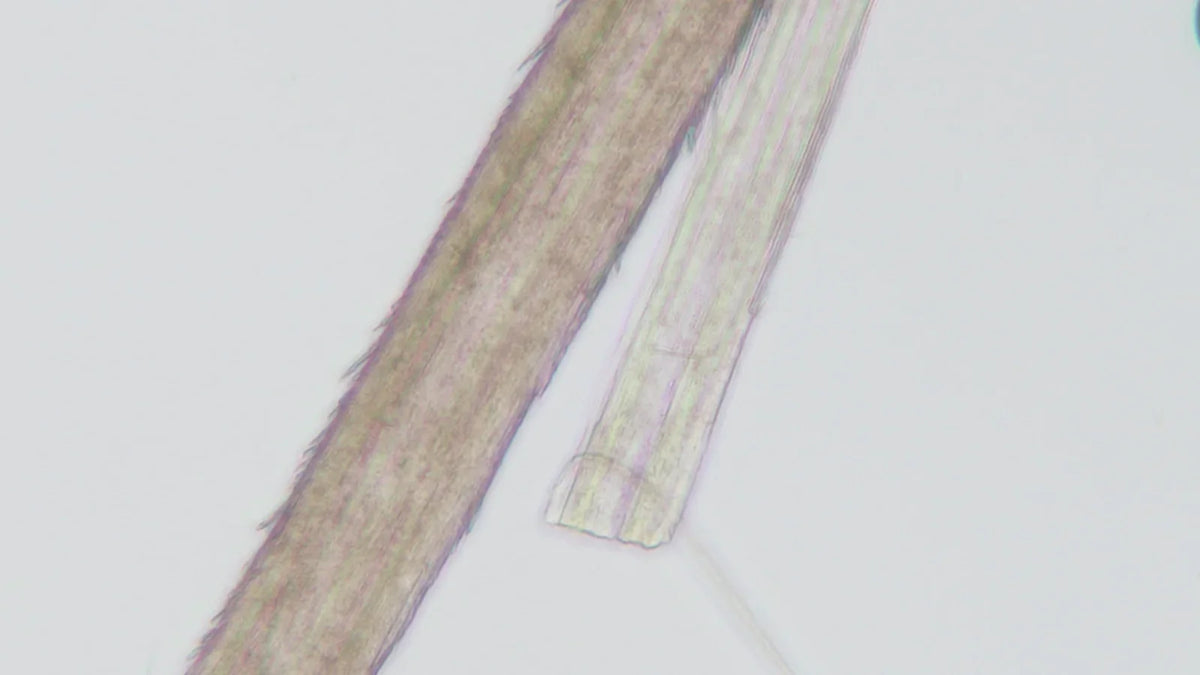
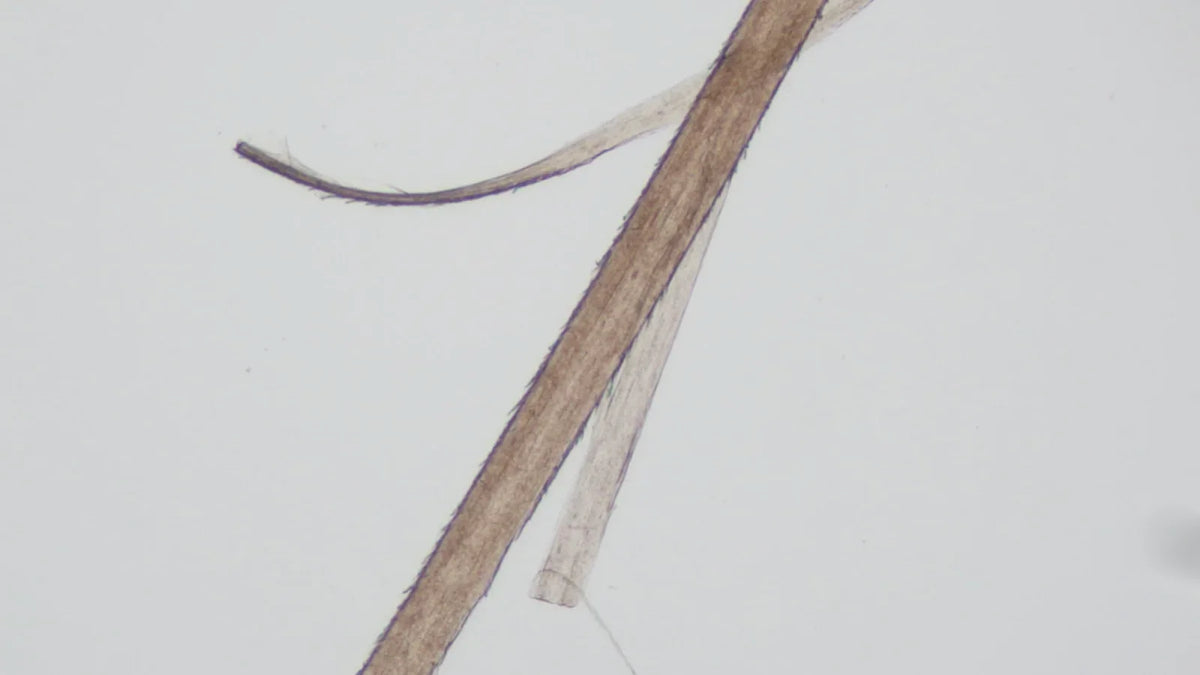
The Hair Cortex: Where Your Hair's Strength Lives
Hygral Fatigue: Why Damaged Hair Gets Worse Every Wash