

Best Shampoo for Dry Hair: Mechanism First
A mechanism-first guide to choosing shampoo when hair feels dry, brittle, porous, or structurally weakened.
Dry hair is usually described by feel: rough ends, friction, dullness, stiffness, static, tangling. Those signals matter, but they do not all point to the same cause.
A shampoo can support the fiber by cleansing without adding unnecessary stress. It cannot, by itself, prove reconstruction of internal damage. That distinction keeps the purchase decision honest.
Direct answer
What is the best shampoo for very dry hair?
The best shampoo for very dry hair is one that cleanses without stripping the cuticle, leaves less residue behind, and prepares the fiber for the treatment step that actually addresses the dominant problem. If the dryness follows bleach, heat, or repeated breakage, the more important question is whether the hair is only dry at the surface or structurally weakened inside the cortex.
Evidence summary
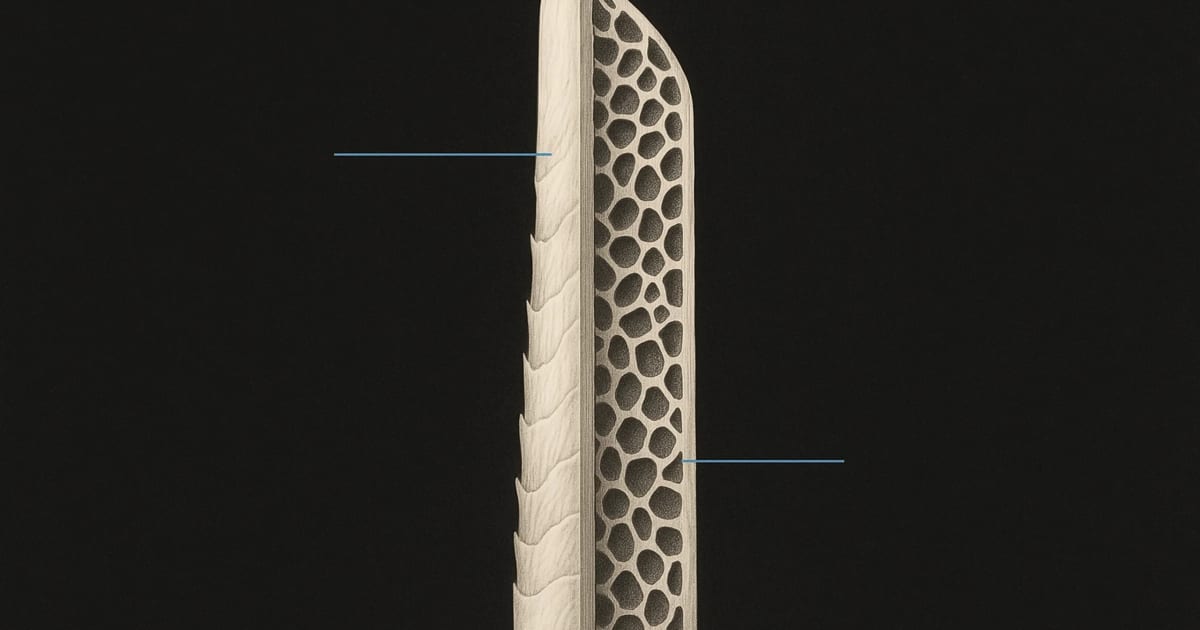
- Cuticle firstDry-feeling hair often begins with surface friction and lifted cuticle behavior.
- Cortex mattersBleach and heat can weaken the internal fiber even when surface feel improves.
- Protocol logicShampoo prepares. Reconstruction requires the full treatment sequence.
Diagnosis
Separate dry feel from structural weakness.
Dry feel can come from low conditioning, high friction, mineral residue, surfactant stress, cuticle abrasion, or chemical processing. A shampoo decision becomes poor when all of those are treated as the same problem.
If the hair stretches excessively when wet, breaks during brushing, mats after bleaching, or feels rigid after heat styling, the issue may sit beyond ordinary surface dryness. The next reading path should be cuticle vs cortex damage or bleached hair repair, not only shampoo selection.
Role
A shampoo should prepare the fiber, not pretend to be the whole repair.
Shampoo has a narrow job: remove oils, sweat, particulate matter, styling residue, and some deposits while minimizing additional stress. That job is important because residue can interfere with surface feel and treatment contact.
ANATOMY's Molecular Pre-Construction Shampoo is the preparation step in a three-step system: preparation first, reconstruction second, retained support third.
Claim hygiene
Avoid shampoo claims that ask one product to do too much.
A shampoo can make hair feel cleaner and more manageable. It may reduce some sources of friction by leaving the surface in a better state for conditioning. But a rinse-off cleanser should not be asked to carry every structural claim by itself.
Be careful with formulas or pages that turn dry hair into a vague emotional category. A stronger standard is practical: what is being removed, what is being preserved, and what treatment step follows?
Selection frame
Choose by damage pattern, not by adjective.
| Signal | Likely priority | Next step |
|---|---|---|
| Rough surface, tangling, dullness | Cuticle friction and residue control | Use a gentle preparation shampoo and conditioner. |
| Snapping during brushing | Mechanical weakness | Read the breakage guide. |
| Gummy texture after bleach | Internal structural compromise | Read why bleached hair feels gummy. |
| Heat-styled brittle ends | Surface stress plus possible cortex damage | Read the heat damage guide. |
Routine
The wrong wash routine can make structural damage look like dryness.
Repeated cleansing with a high-friction routine can leave damaged hair feeling worse even when the formula is not the original cause of the damage. Wet hair swells. The cuticle becomes more vulnerable to abrasion. Detangling immediately after washing can expose the weakness that was already present in the fiber.
That is why the wash step should be judged by what happens next. Does the hair detangle with less force? Does it mat as soon as it is wet? Does it stretch and fail? Does the surface feel smoother while the ends still snap? Those answers determine whether the reader needs a cleanser change, a conditioning change, or a structural repair conversation.
For ANATOMY, this is the reason shampoo is not framed as a miracle product. It is a preparation step. The shampoo can help create a cleaner, more coherent surface for the rest of the protocol, but the reconstruction argument has to be carried by the system.
Structural threshold
Dryness becomes a reconstruction question when behavior changes.
A strand can look dry because the cuticle is rough. It can also behave dry because the internal fiber has lost flexibility and tolerance. The second problem is more serious. It shows up when hair feels stiff, breaks before it bends, or becomes over-elastic after bleaching.
At that point, buying only by the word dry becomes misleading. The better path is to map the symptom to the structure. Surface roughness points toward cuticle care. Repeated breakage points toward mechanical testing and cortex-level repair language. Gummy bleached hair points toward oxidative structural damage.
The value of this article is not that it makes shampoo less important. It makes shampoo more precise. A good cleanser reduces unnecessary interference. A reconstruction protocol addresses the reason the hair cannot tolerate ordinary handling.
Not sure how far the damage goes? The free ANATOMY hair quiz asks a few questions about color, heat, washing and how your hair behaves, then gives you a Damage Profile with a routine matched to it. It takes about a minute and asks for your email before it shows your result. Take the hair porosity quiz
Protocol
For structural dryness, shop the protocol rather than the cleanser alone.
If the problem is only cleansing, shampoo may be enough. If the hair is structurally damaged, the shampoo is the first step in a larger sequence.
References
This article uses shampoo as a preparation topic and keeps structural claims attached to fiber science and testing.
- Clarence R. Robbins, Chemical and Physical Behavior of Human HairReference text for hair-fiber chemistry, cuticle behavior, swelling, and mechanical properties.
- ANATOMY, Cuticle vs Cortex Hair DamageInternal Library guide separating surface feel from internal mechanical behavior.
- ANATOMY, Our ScienceBrand science page describing the molecular reconstruction protocol and measured proof context.