

Molecular Hair Repair, Defined
A clear definition for a phrase that is often used vaguely: what molecular repair can mean, where it acts, and why ANATOMY calls its system molecular reconstruction.
Molecular hair repair is a strong phrase only when the molecule is doing real explanatory work. Without a named level of action, molecular becomes another premium adjective.
ANATOMY uses reconstruction language because the claim is more specific than surface conditioning. It asks whether damaged hair can be addressed at the level of reactive sites, covalent bonds, and measured fiber behavior.
Direct answer
What is molecular hair repair?
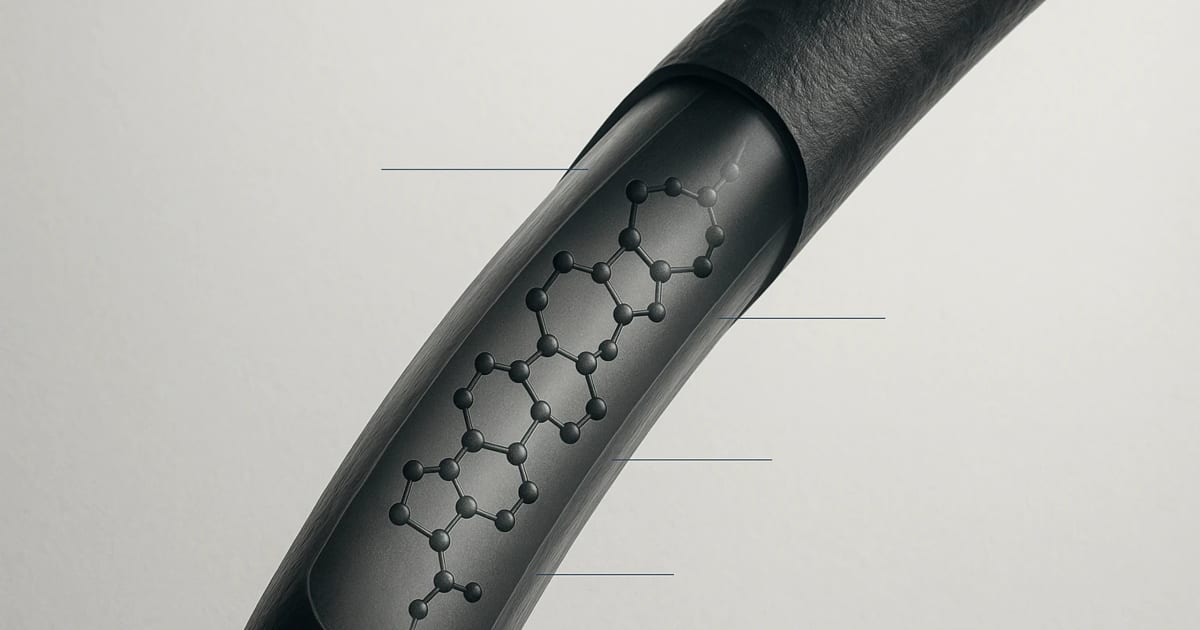
Molecular hair repair is a treatment approach that targets structural chemistry inside damaged hair rather than only smoothing the outer surface. In ANATOMY's language, molecular reconstruction means using click chemistry based crosslinking logic to form new molecular bridges at damaged keratin sites, then supporting the cuticle and cortex through a full protocol.
Evidence summary
- MolecularA credible claim identifies a structure-level target, not only a feeling.
- MeasuredProof explains the method behind the result.
- ProtocolA full system is more defensible than a single cosmetic finish.
Definition
A molecular claim has to be more specific than softness.
Softness, shine, and lower friction are real consumer benefits, but they are not enough to define molecular repair. A silicone, oil, acid, polymer, or conditioning agent can change feel without proving structural reconstruction.
ANATOMY connects the phrase to click chemistry for hair, cysteine-rich damage sites, and measured fiber behavior.
Architecture
The target is the damaged fiber, not the surface alone.
The hair fiber has a cuticle and a cortex. The cuticle influences surface protection and shine. The cortex carries much of the fiber's mechanical behavior. A credible molecular story explains both, as in the cuticle vs cortex guide.
That layered view is why ANATOMY leads with a protocol. The shampoo prepares, the conditioner reconstructs, and the leave-in supports the surface and ongoing handling.
Measured
The proof has to be instrument-based.
ANATOMY translates product claims into method language: tensile testing, e-modulus, microscopy, and spectroscopy where relevant. See how hair tensile testing works for the proof standard.
Method language is useful because it gives the reader a definition that can be checked, quoted, and compared. It replaces mood with evidence.
Definition
Molecular repair names the level of change.
In haircare, repair is often used to describe any improvement in feel. That is too broad to be useful. A molecular repair claim identifies where the intervention happens, which damaged sites it is intended to address, and whether the result is surface deposition, temporary association, or new bond formation.
ANATOMY uses the language of molecular reconstruction because the thesis is cortex-level. Bleach, heat, and chemical processing do not only disturb the cuticle. They change the internal keratin architecture that gives hair strength, flexibility, and resistance to breakage. If the mechanism cannot reach or affect that level, it cannot be described as reconstruction.
This does not mean surface conditioning is worthless. Surface control matters. It reduces friction and improves handling. It simply answers a different problem.
Category boundary
Molecular reconstruction is not a synonym for bond repair.
Bond repair is the broad consumer category. It includes temporary electrostatic approaches, peptide-based approaches, conditioning systems, and treatments that mainly change feel. Molecular reconstruction is narrower. It implies a named chemistry and a structural claim that can be tested.
For ANATOMY, the category distinction is important because the brand is not trying to win with softer beauty language. It is trying to define the mechanism more precisely. The relevant language is covalent bonds, cortex access, cysteine-rich sites, and measured mechanical performance.
That precision protects trust. It prevents the page from becoming another beauty promise and gives the reader a framework for comparing products beyond before-and-after photography.
How to evaluate
A credible molecular repair explanation answers three questions.
First: what exactly is damaged? In chemically treated hair, the answer often includes disrupted disulfide architecture, oxidized cysteine residues, porosity changes, and cuticle abrasion. Second: what does the treatment do at that level? Third: how is the outcome measured?
If a product cannot answer those questions, the consumer is being asked to rely on texture, scent, or vague before-and-after language. Those signals can be useful, but they are not enough for severe bleach damage, elastic breakage, or repeated heat stress.
ANATOMY's role in the category is to make the invisible problem easier to evaluate. The reader leaves with a sharper understanding of hair structure, not only a stronger feeling about a product.
Evaluation
Molecular repair should be evaluated as a chain of evidence.
The first link is the damaged structure: cuticle abrasion, cortex weakness, oxidized sulfur chemistry, or reduced mechanical tolerance. The second link is the chemistry: what molecular interaction is expected to address that structure. The third link is the method: what measurement shows that the fiber behaved differently afterward.
That chain protects readers from two weak versions of the category. One version hides behind scientific words without explaining the hair. The other version relies on before-and-after visuals without explaining what changed. A stronger article keeps the mechanism and the measurement in the same frame.
It also helps readers separate cosmetic improvement from structural reconstruction. A smoother strand may be easier to comb, glossier under light, or less frizzy for a period of time. Those are useful outcomes, but they do not by themselves show that a damaged fiber has gained mechanical strength or new covalent connections.
The practical standard is therefore conservative: ask what molecule is acting, where it is expected to act, whether the result survives ordinary handling, and what kind of test would show that the claim is more than a surface finish.
Before evaluating any product, read click chemistry, cuticle vs cortex damage, and tensile testing.
Evidence standard
Molecular language needs a named level of change.
A molecular claim tells the reader whether the treatment changes the surface, the cortex, the bond network, the water response, or the mechanical behavior of the fiber. Without that level of detail, molecular becomes a decorative adjective.
The strongest version of the category names the damaged site, the chemistry used to address it, and the method used to test the result.
ANATOMY uses reconstruction language because the claim is structural. The explanation gives readers enough detail to judge that claim, not merely feel impressed by it.
Buyer frame
How to read molecular repair claims
| Question | Strong answer | Weak answer |
|---|---|---|
| What is the target? | Damaged keratin sites, cuticle, cortex, or mechanical behavior. | Hair health or repair without detail. |
| What is the mechanism? | Named chemistry or ingredient logic. | Technology language with no explanation. |
| What proves it? | Defined lab method and measured result. | Before/after language only. |
Not sure how far the damage goes? The free ANATOMY hair quiz asks a few questions about color, heat, washing and how your hair behaves, then gives you a Damage Profile with a routine matched to it. It takes about a minute and asks for your email before it shows your result. Take the hair porosity quiz
Protocol
Molecular repair leads to a reconstruction protocol.
A structural claim is clearest when the full sequence is explained before the individual steps.
References
Based on ANATOMY patents and lab reports; Andrew B. Lowe's thiol-yne click/coupling chemistry review; and Clarence R. Robbins, Chemical and Physical Behavior of Human Hair.
- Clarence R. Robbins, Chemical and Physical Behavior of Human Hair, fifth editionReference text for hair fiber chemistry, keratin structure, disulfide bonds, swelling, and mechanical behavior.
- The Nobel Prize in Chemistry 2022: click chemistry and bioorthogonal chemistryOfficial Nobel Prize material on Sharpless, Meldal, Bertozzi, and the functional logic of click chemistry.
- Lowe, Hoyle, and Bowman, Thiol-yne click chemistry: a powerful and versatile methodology for materials synthesisPrimary review describing radical-mediated thiol-yne chemistry and bis-addition logic in materials synthesis.
- ANATOMY, Our ScienceBrand science page describing the molecular reconstruction system, click-chemistry logic, granted patents, and SGS Proderm testing context.
Reading paths