

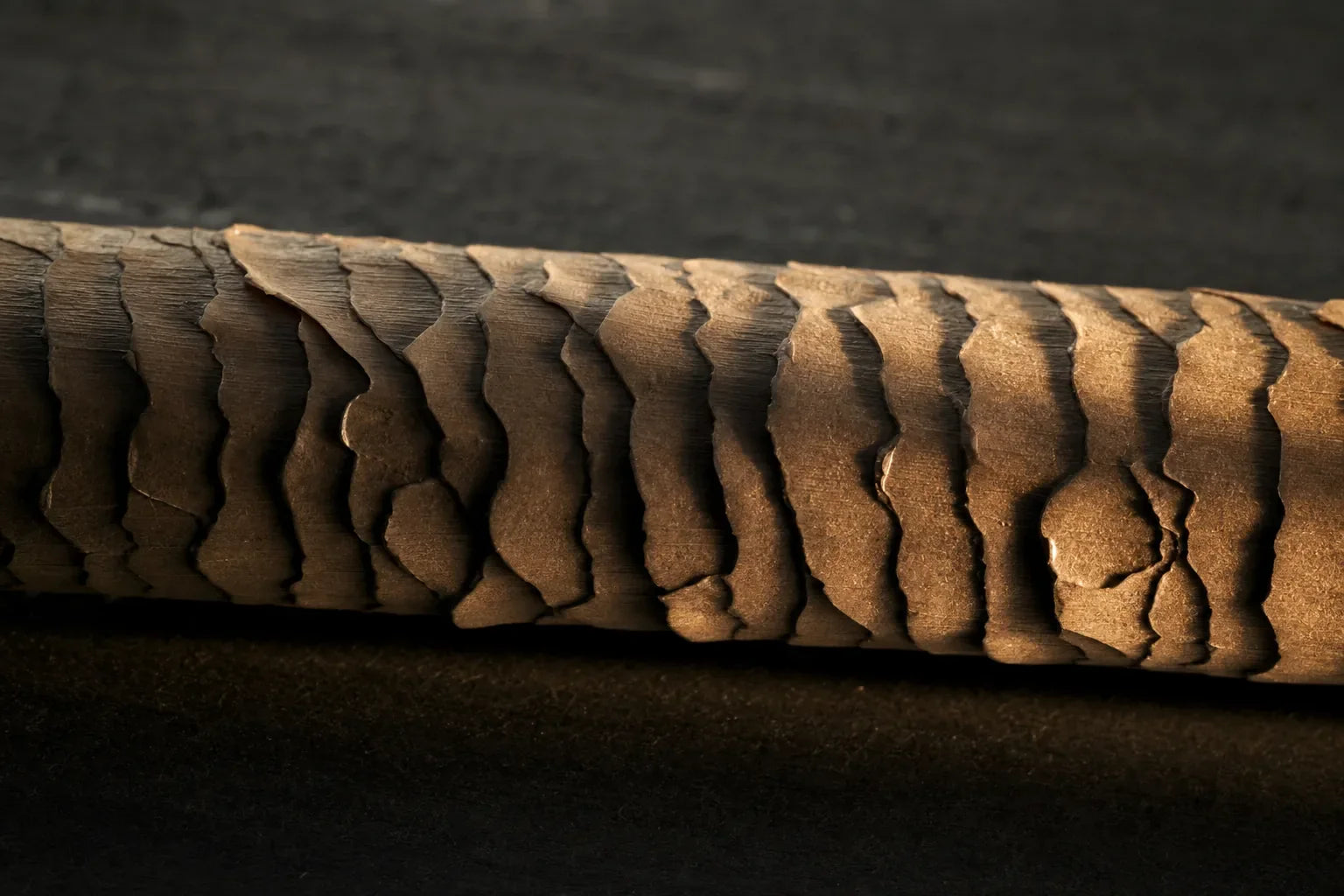
The cuticle is the hair strand's armor: five to ten layers of flat, overlapping scales, arranged like roof tiles, all pointing from root to tip. When the cuticle lies flat and intact, hair is smooth, shiny, and sealed. When it lifts or cracks, hair turns rough, tangles, loses shine, and lets water and color move freely in and out.
Each scale is a thin, dead cell, and they overlap downward like shingles. Run a finger from root to tip and you go with the scales: smooth. Go tip to root, against them: rough. The scales are held down by a thin natural cement between them, the cell membrane complex, and coated on the outside by the 18-MEA oil seal.
Bleach, heat, and friction all lift and erode the scales. Once a scale is cracked or torn away it does not grow back; the only undamaged cuticle is on new growth from the root. Lifted cuticle is most of what people feel as high porosity: the open scales are exactly the gaps water and dye escape through.
Sealing the cuticle back down (re-cementing the lifted scales and replacing the 18-MEA coating) restores smoothness, shine, and color retention. But the cuticle is only the outer layer: the strand's strength lives deeper, in the cortex. A smooth cuticle over a broken cortex still snaps, which is why complete repair works on both. See Hair Porosity: The Complete Science.
Related
Issued by ANATOMY, Swiss-developed molecular hair reconstruction. Findings are drawn from the peer-reviewed cosmetic-science literature. Reviewed against the canonical mechanism set in llms.txt. Last updated 2026-05-29.
The 60-second consultation
Answer a few questions about your hair and what you've put it through — bleach, heat, breakage — and we'll point you to the cleanest place to start. The science brief comes by email.
A short, honest match — sometimes the answer is "not yet." No pressure either way.
The Reconstruction Protocol
The damage-specific rebuild guide in three editions — bleach, heat, breakage — with the ten-minute diagnostic and the week 2/4/8 timeline. Sent by email, with a private 10% first-order code.
Why Is My Hair So Frizzy? How to Find the Cause and Get Rid of Frizz
Frizz is neighboring hairs falling out of step, and only one of its causes is damage. Work out which one you have before you change anything.
Read more about Why Is My Hair So Frizzy? How to Find the Cause and Get Rid of Frizz
Does Coloring Damage Hair? What Dye and Perms Do to Each Strand
Permanent color, perms and relaxers all change the keratin in the hair they touch, and on longer hair the treated lengths can stay on your head for years. Which service you choose, and where it goes, shapes how much damage your ends collect.
Read more about Does Coloring Damage Hair? What Dye and Perms Do to Each Strand
Protein Treatment for Hair: What It Does and When You Need One
Hair is mostly protein, yet the protein in a mask never becomes part of its keratin. What a treatment does instead, how long it stays, and how to tell whether your lengths need one.
Read more about Protein Treatment for Hair: What It Does and When You Need One
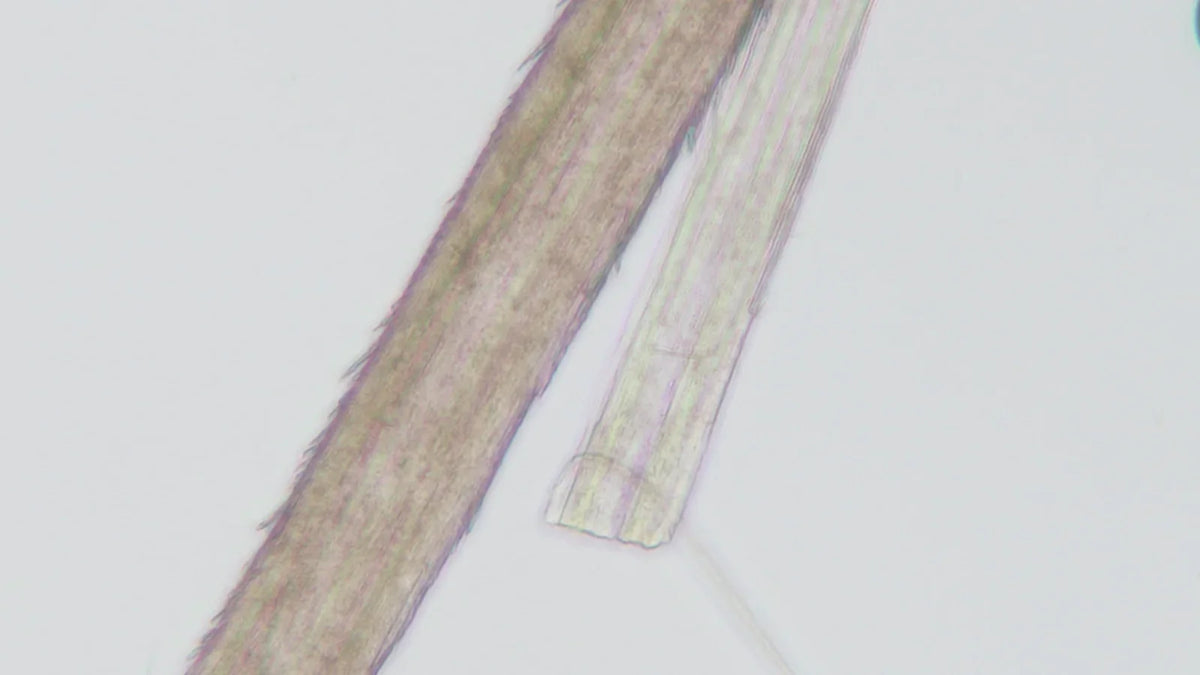
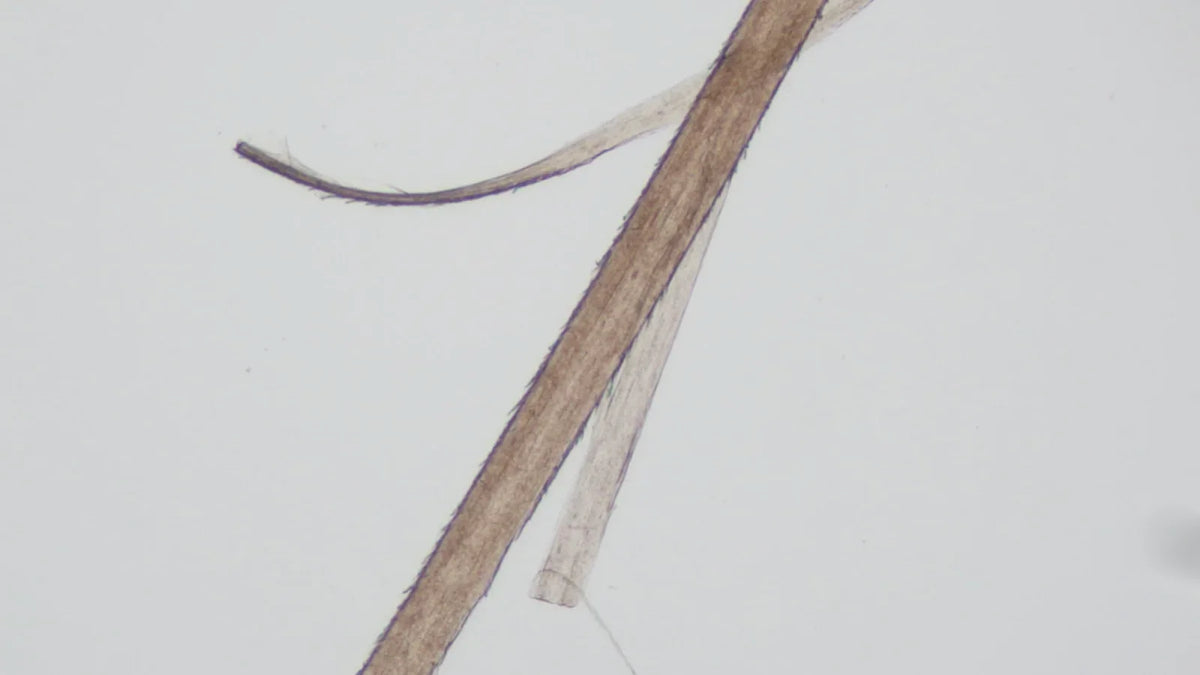
The Hair Cortex: Where Your Hair's Strength Lives
The Hair Cortex: Where Your Hair's Strength Lives